
Understanding The Socio-Culture Development of The Rural Area Community (Felda): A Systematic Review
Rumusan
The government’s intention of setting up FELDA to help the poor Malay and to eradicate poverty is successful. These hardcore poor Malay were moved into a settlement provided with basic amenities and infrastructure to become modern farmers and to develop and upgrade their economic and social status via land ownership and better future opportunities for the family and children. Although they were moved into different areas, far from their village these settlers are holding onto and practicing the Malay traditional way of life in the new settlement. Social cohesiveness can be seen throughout many
Penemuan
Rumusan
The government’s intention of setting up FELDA to help the poor Malay and to eradicate poverty is successful. These hardcore poor Malay were moved into a settlement provided with basic amenities and infrastructure to become modern farmers and to develop and upgrade their economic and social status via land ownership and better future opportunities for the family and children. Although they were moved into different areas, far from their village these settlers are holding onto and practicing the Malay traditional way of life in the new settlement. Social cohesiveness can be seen throughout many community activities that emphasize doing and working together. Besides, the community is also still obedient to the teachings of Islam and practise it in their daily life. It can be concluded that the settlers’ socio-cultural influences are influenced and constructed by the fact that they are sharing similar backgrounds, coming from poor and landless families from all over Malaysia. At the settlements, these settlers’ families were equally trying to improve their socio-economic status. They were starting a new life with equal social status. What would differentiate them would be the roles that they play in the settlement whether as a leader or ordinary members. These underprivileged groups of people were given 8 to10 acres for rubber cultivation and 10 to14 acres for oil palm cultivation besides allocated homeland. Thus, it is not surprising that FELDA settlers have remained loyal to the government (Barisan Nasional). Besides, one of the things that differ in rural communities in FELDA from other areas is that FELDA settlers are changing in terms of physical modernization, administrative and management rationalisation, and in the management of their communities. They have the FELDA administration that manages the economic part, while in terms of the bureaucracy, FELDA has committees and associations that carry out social activities and take care of their welfare. At the same time, the social mobility of second and third generation of FELDA settlers are changing but it creates other issues such as out-migration, unemployment, poor career aspects among others. The younger generation of FELDA is indeed receiving a better education as compared to their parents. But the structure of FELDA does not provide for these changes. Industrialization and urbanisation are taking away talented human capitals. Plus, the young generation is also uninterested in continuing agricultural work. In the FELDA plantation estates, the workers are dominated by migrant labourers. Issues that are dominant to the FELDA community, including migration and social mobility, nutrition, FELDA land inheritance, education, and impact of COVID-19 pandemic. Other than that, social misdemeanours are also an issue in FELDA. These include loitering, illegal racing, drug use or drug related arrest, truancy, vandalism and smoking among the young students. The literature shows that many factors contribute to the social problem in FELDA including unemployment, parents and caretaker attitude, lack of parental supervision as well as media misuse. Urbanisation is not only changing the traditional role of women as mothers, wife and daughters but also enhancing their significant role in contributing to the family’s and/or FELDA economy activities. The former through their informal subsidiary jobs related to agriculture besides other service oriented economic activities such as sewing, laundry services, small retail businesses, and selling handicrafts. While the latter is done through formal and informal business. Due to the escalation of the community’s quality of life, women of FELDA were found to be involved in entrepreneurship. They also play a significant role in local social political activities. FELDA is always seen as a voting block for the UMNO. This probably due to the fact that majority FELDA settlers are Malay Muslim who are indebted to the ruling party (UMNO) who are seen as helping them to improve their social economic status. A sense of gratitude is part and parcel of Malay identity, and this norm is strongly held by the settlers. Party’s identification was significant in determining FELDA’s voters’ behaviour. However, in the last GE-14, the voting behaviour of FELDA settlers were influenced by issues like 1MDB, FGV, and Felda’s scandals. Thus, party identification was no longer a major factor in voting but a rational choice. The urbanisation is not only changing the traditional role of women as mothers, wife and daughters but also enhances their significant role in contributing to the family’s and/or FELDA economy activities. The traditional roles include informal subsidiary jobs related to agriculture besides other service-oriented economic activities such as sewing, laundry services, small retail businesses, and selling handicrafts. Due to the escalation of the community’s quality of life, the women of FELDA were found to be involved in entrepreneurship. There are two issues related to women in FELDA that have not been covered in the literature that need further study. First, single mothers and secondly, domestic violence. Their experiences and narratives are missing from the literature. Although a substantial body of literature exists on single mothers and domestic violence in Malaysia, those focused on women in FELDA is limited. Hence, it is important for the authorities involved to ensure FELDA communities receive appropriate assistance and be fully (men and women) involved in development programmes so that the settlers can continue to play a vital role in contributing to the development of the country.
Muat Turun
Kajian Berkaitan
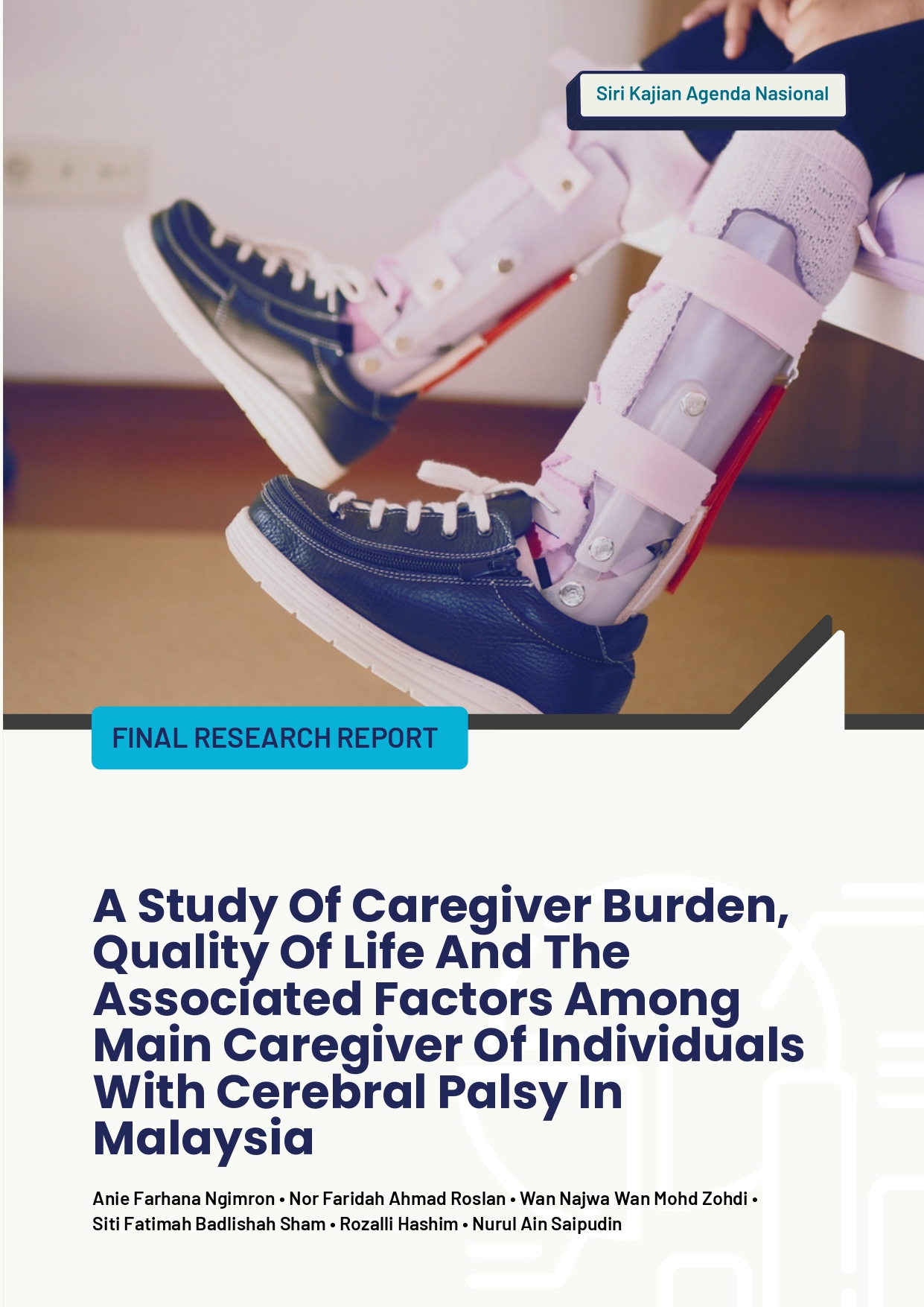
A Study Of Caregiver Burden, Quality Of Life And The Associated Factors Among Main Caregiver Of Individuals With Cerebral Palsy In Malaysia
Cerebral palsy (CP) is the leading cause of disability among children and a lifelong neurological condition that requires varying levels of assistance. The dependency towards the main caregiver is influenced by various demographic and social factors. Understanding the complex challenges faced by caregivers is crucial, as these may affect them from various perspectives, including socio-economic, emotional, and quality of life aspects. However, there is still limited research in Malaysia on the caregiving burden and the quality of life of main caregivers of individuals with CP. This study aimed
Kesejahteraan Rumah Tangga Berkerjaya
Dalam dunia moden ini, peranan tradisional suami dan isteri telah berubah disebabkan tekanan ekonomi dan peningkatan penyertaan wanita dalam tenaga kerja. Namun, perubahan ini membawa kepada cabaran untuk mengekalkan kesejahteraan rumah tangga. Artikel ini meneroka penemuan utama daripada Kajian Mengukuhkan Kesejahteraan Rumah Tangga Muslim Untuk Suami Isteri Berkerjaya (Dwi-Peranan) di Lembah Klang, yang dijalankan oleh Kajian Dasar IKRAM Sdn Bhd (KADRI).
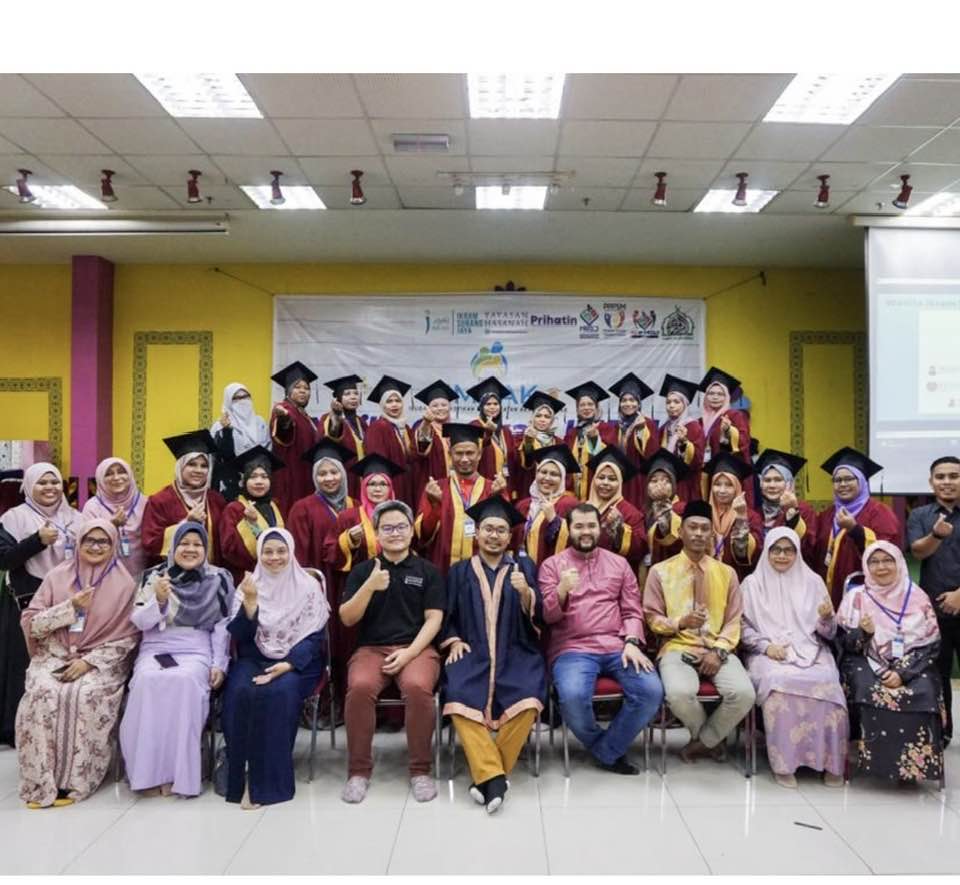
Pendidikan Solusi Kemiskinan
Kemiskinan adalah isu sejagat yang menekan jutaan keluarga di seluruh dunia. Ia bukan sekadar soal kekurangan wang tetapi turut berkaitan dengan akses kepada pendidikan, peluang pekerjaan, dan kemampuan untuk memperbaiki kehidupan. Di tengah isu ini, program seperti Modul Ibu Bapa Memastikan Peningkatan Akademik Anak-anak (IMPAK) muncul sebagai satu inisiatif penting dalam mengubah kehidupan masyarakat miskin bandar. Artikel ini membincangkan bagaimana pendidikan dapat menjadi kunci kepada peningkatan mobiliti sosial, dengan fokus kepada dapatan kajian Program IMPAK sebagai Solusi Masalah Mobi